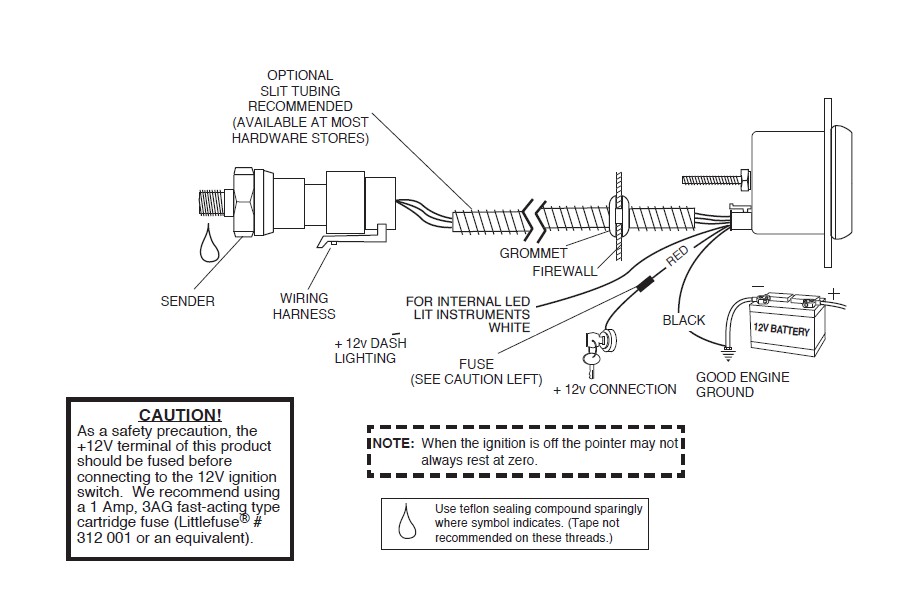
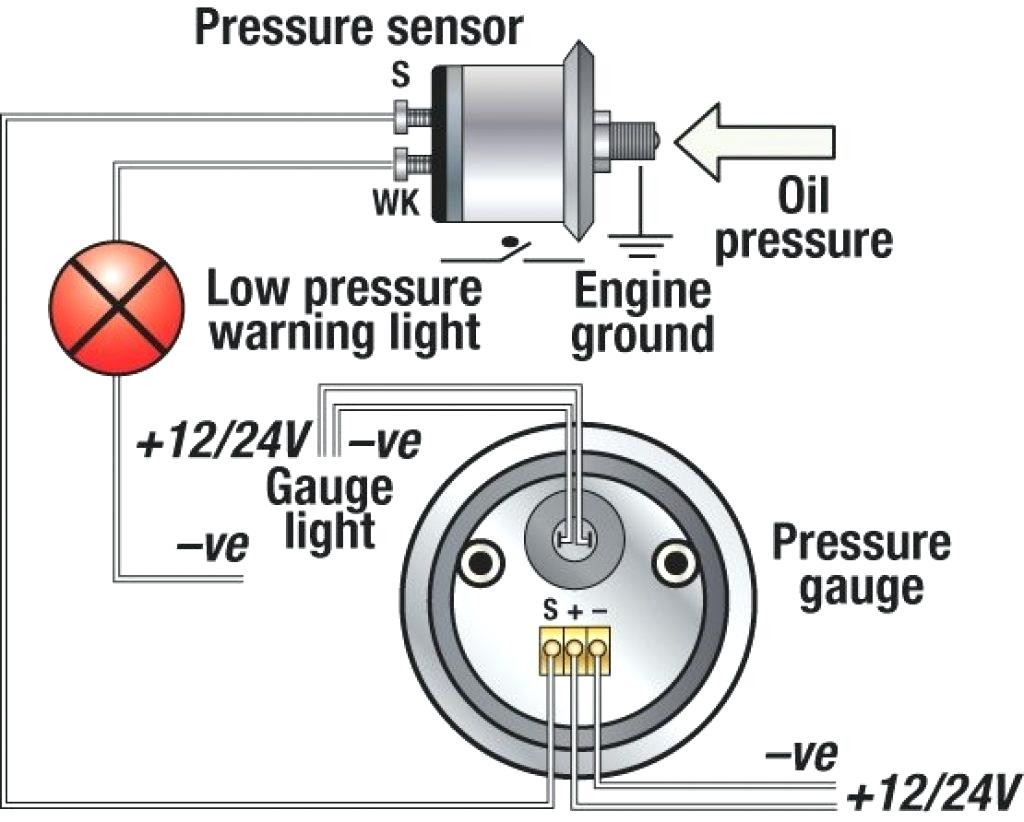
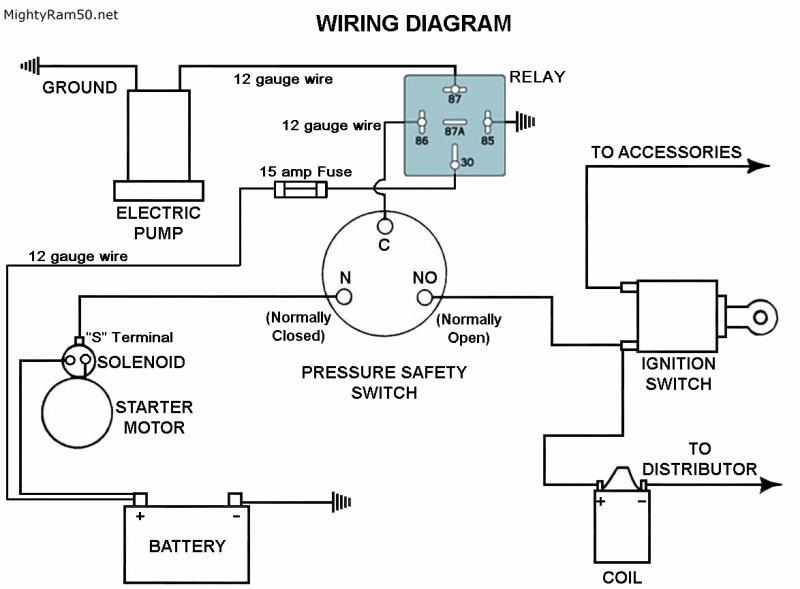
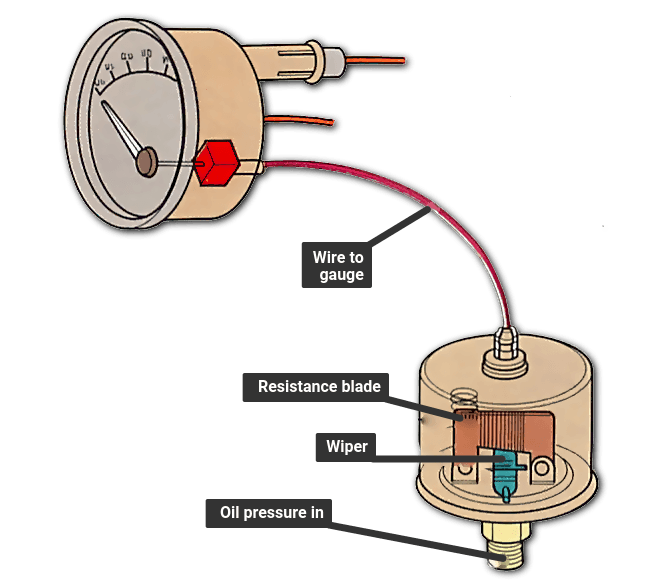
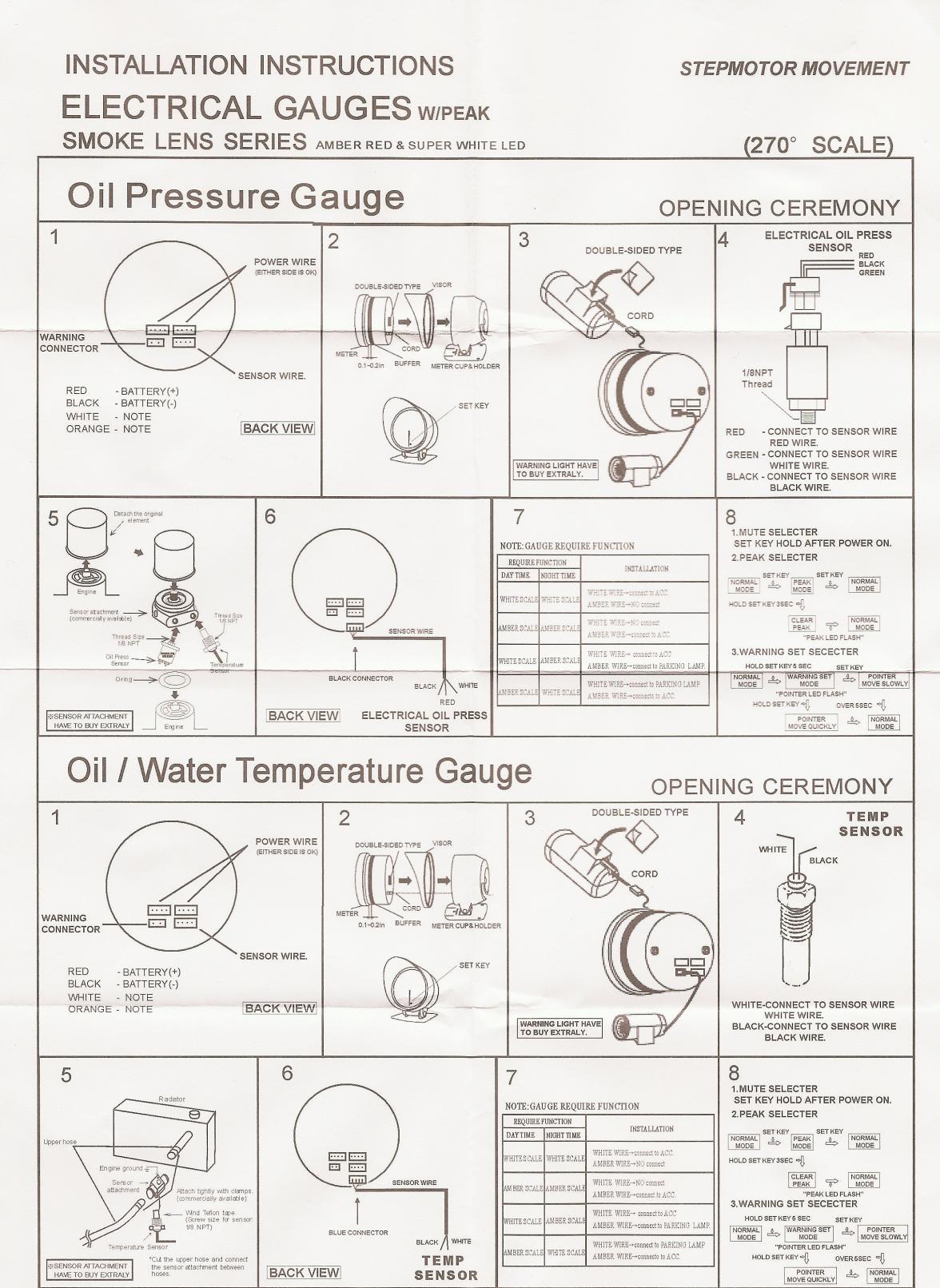
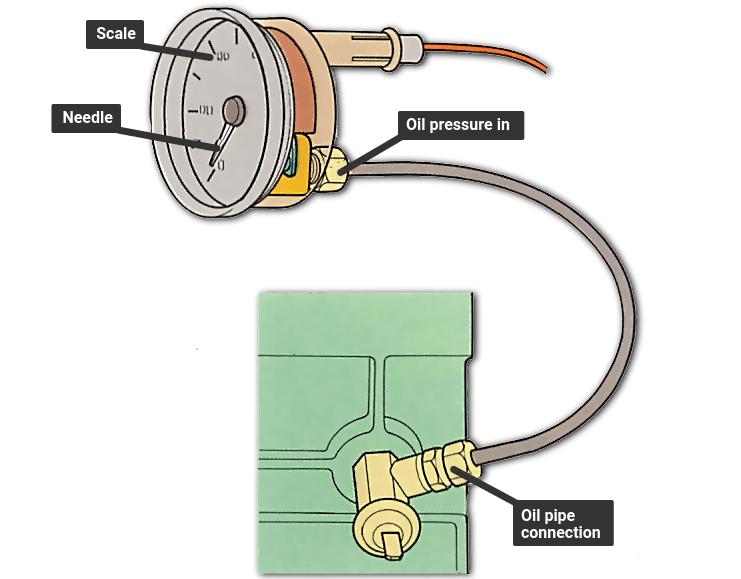
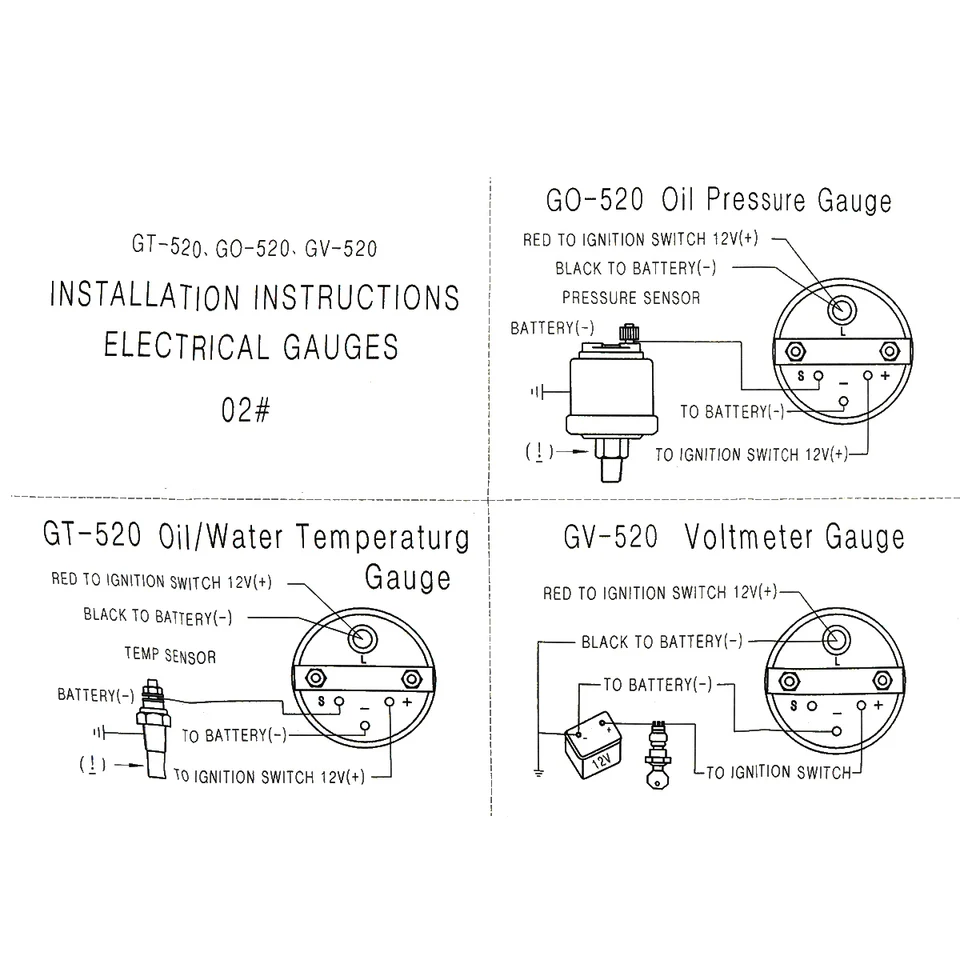
Pressure gauges can measure the pressure present in a system utilizing air or liquids. An electrical pressure gauge is simpler and more versatile for installation than a mechanical gauge but is not quite as fast to respond to pressure changes. The factory warning light sender can be retained to operate the warning light with the use of a T-Fitting which is commonly available at auto parts.. An electric oil pressure gauge is a great way to accurately monitor your oil pressure and protect your engine. The wiring diagram for this gauge includes a power supply wire, a ground wire, an oil pressure sender, and a terminal for the gauge.
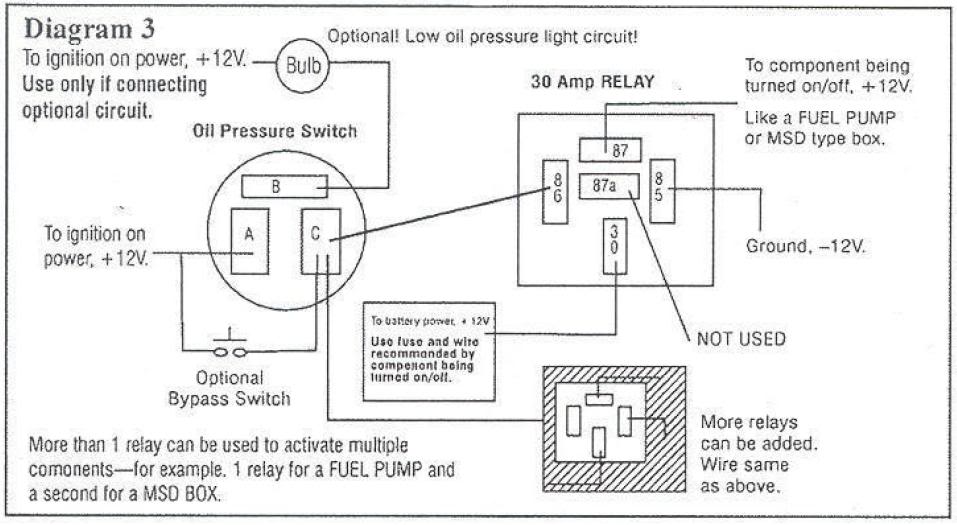
The wiring diagram for an oil pressure gauge consists of three major parts: the power source, the gauge itself, and the sensor. In order to connect the gauge to the power source, the power source must be grounded and connected to the gauge through a black wire.. An oil pressure gauge wiring diagram shows the electrical connections between the dashboard gauge, the engine sender, and the power source. Typically, a hot wire provides fused power, a ground wire completes the circuit, and a traveler wire connects the common terminal on the sender to the gauge signal input.
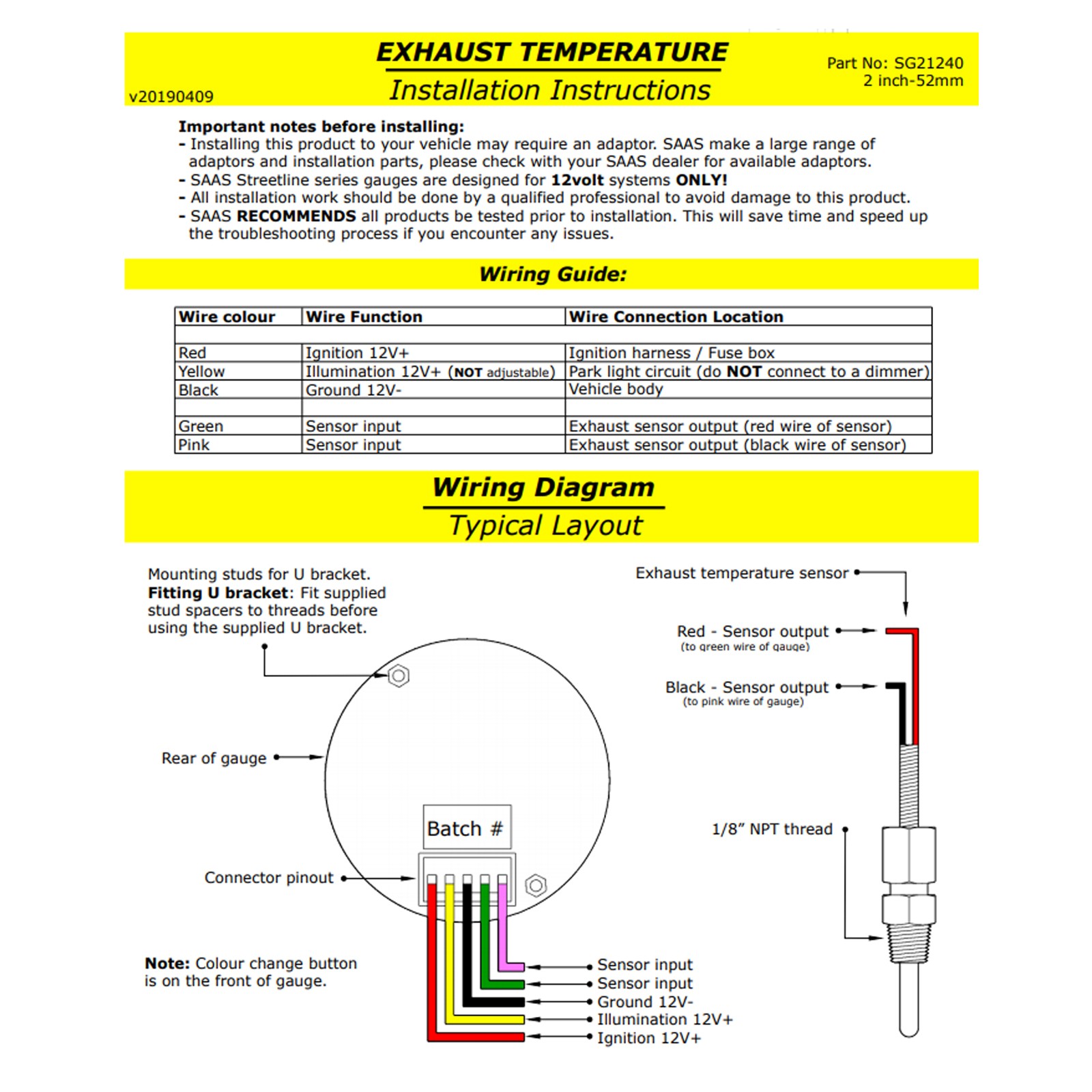
![[DIAGRAM] Vdo Oil Gauge Wiring Diagrams](https://paintingvalley.com/drawings/rpm-gauge-drawing-10.jpg "[DIAGRAM] Vdo Oil Gauge Wiring Diagrams")
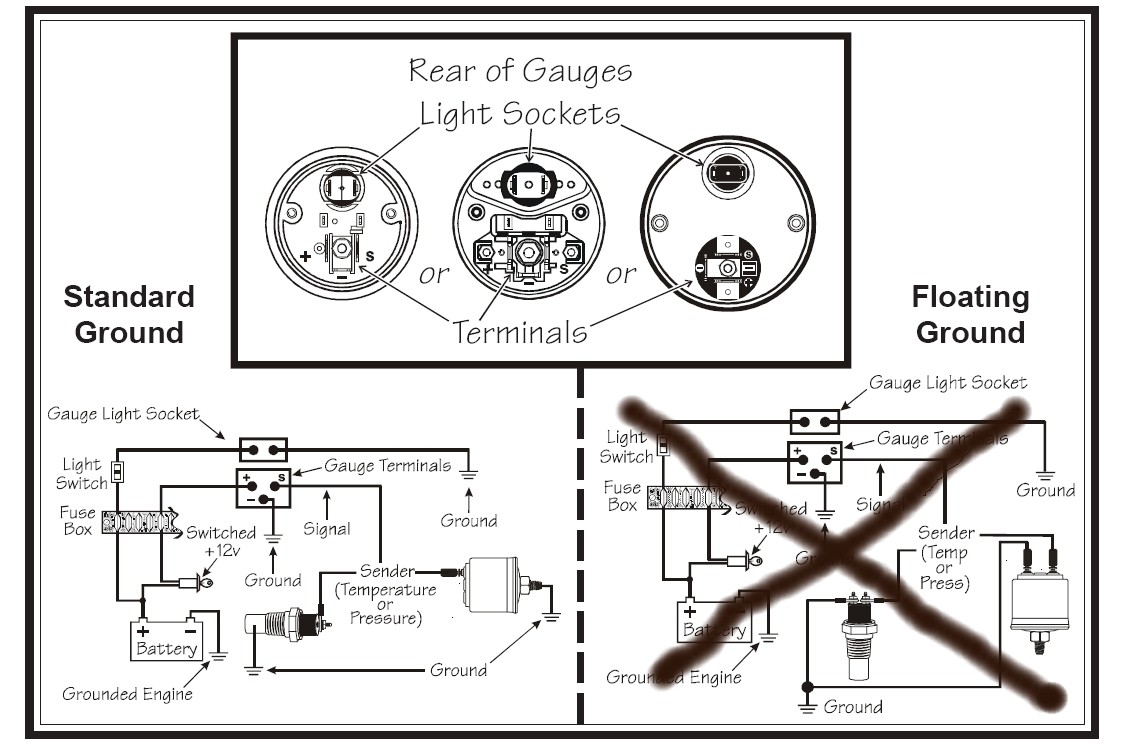
![[DIAGRAM] Wiring Diagram For Saas Oil Pressure Gauge](https://www.autobox.com.au/assets/alt_5/SG21230.jpg "[DIAGRAM] Wiring Diagram For Saas Oil Pressure Gauge")
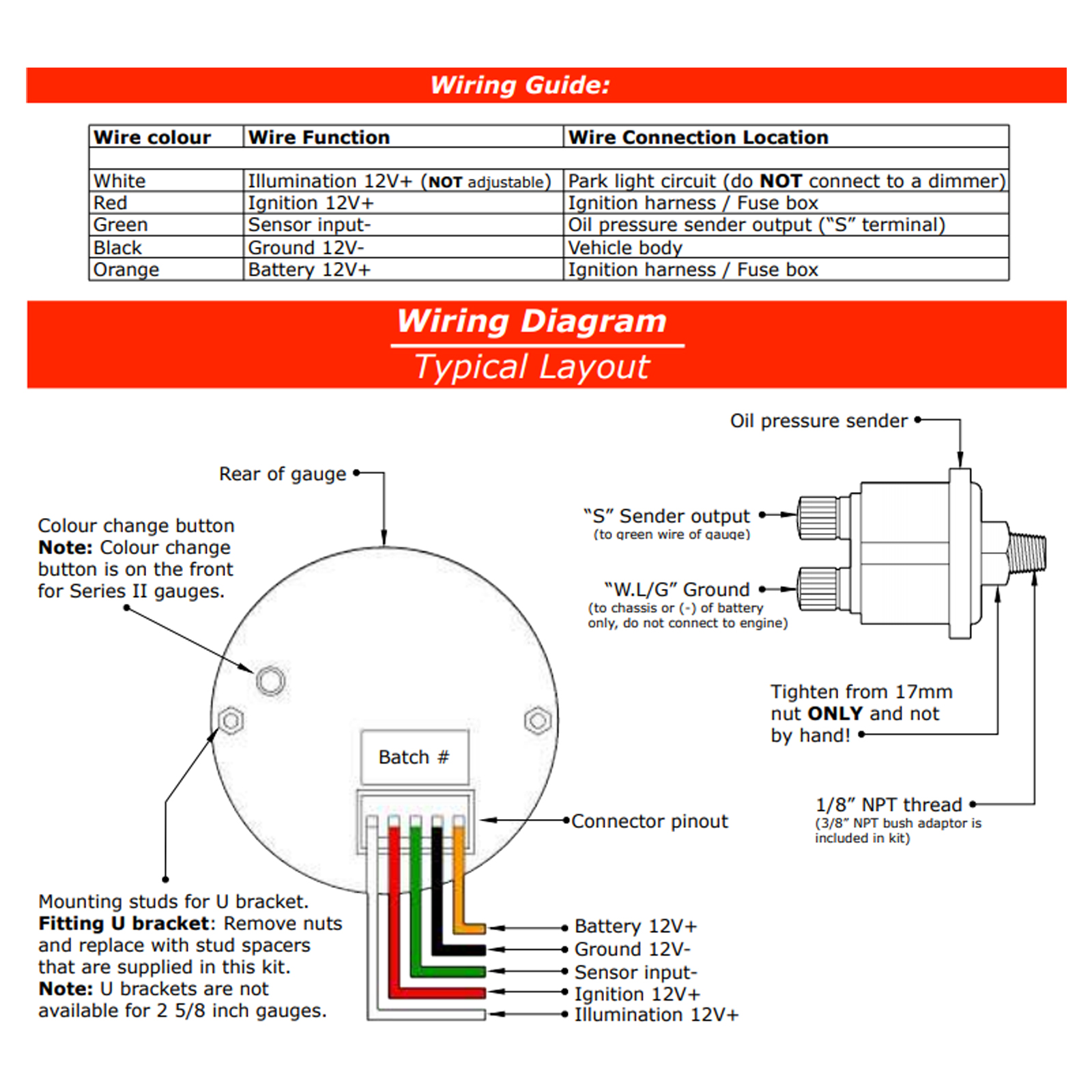





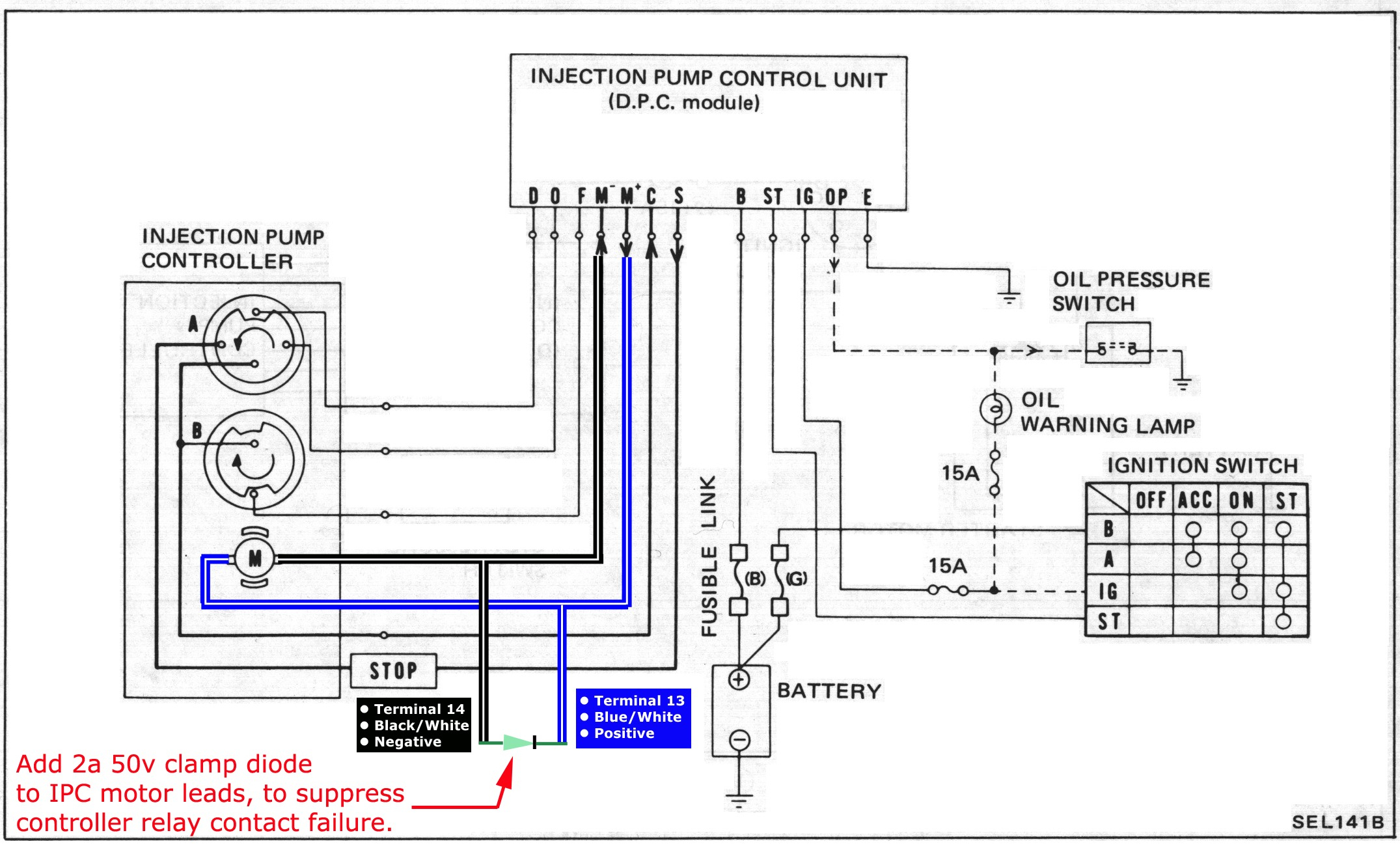


![[DIAGRAM] Wiring Diagram For Saas Oil Pressure Gauge](https://www.autobox.com.au/assets/alt_6/SG21220.jpg "[DIAGRAM] Wiring Diagram For Saas Oil Pressure Gauge")